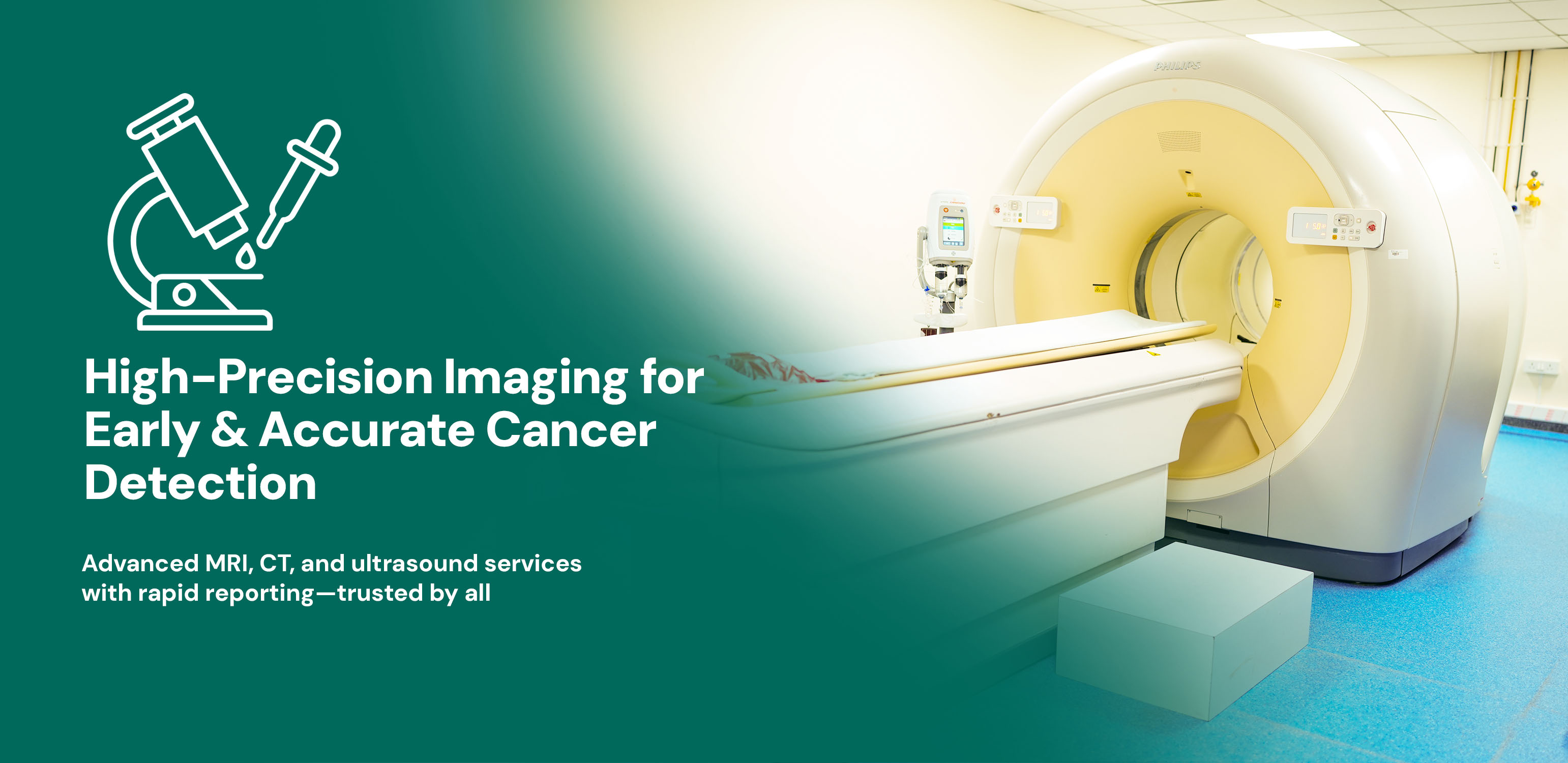
The Department of Radio-diagnosis (Oncologic Imaging) is the vital core for all cancer detection and precision treatment planning. Our expert team of radiologists and nuclear medicine specialists utilizes the latest technologies—including high-resolution MRI, and Interventional Radiology—to visualize, characterize, and guide therapy for tumors throughout the body. Our services span the entire patient journey, from initial screening and diagnosis to staging, treatment monitoring, and long-term surveillance, ensuring every clinical decision is grounded in accurate, detailed image evidence.
The mission of our Radio-diagnosis department is to provide precise, high-resolution visualization of the body's internal structures to inform every critical step in your cancer management, adhering to the quality standards of major bodies like the American College of Radiology (ACR) and NCCN.
We employ dedicated screening modalities (like 3D Mammography and Low-Dose Lung CT) to find cancer in its earliest, most treatable stages, often before symptoms appear.
We determine the exact location, size, and extent of the tumor and whether it has spread (staging), which is paramount for classifying the disease and determining the appropriate surgical or systemic approach.
Imaging is used in real-time to guide minimally invasive biopsies and interventional procedures. We also perform specialized follow-up scans (baseline vs. post-treatment) to objectively measure the tumor's response to chemotherapy or immunotherapy.
Our radiologists are not generalists; they are subspecialized experts (e.g., in Neuroradiology, Body Imaging, or Breast Imaging) who function as essential, equal members of your multidisciplinary Tumor Board team.
We offer a complete suite of diagnostic and therapeutic imaging modalities, combining anatomical detail with functional information for superior diagnostic accuracy.
Provides detailed cross-sectional images using X-rays (CT) or strong magnets and radio waves (MRI). MRI is crucial for excellent soft tissue contrast (e.g., brain, prostate, liver), utilizing advanced sequences like functional MRI (fMRI) and Diffusion-Weighted Imaging (DWI).
Detailed Maps: We use advanced scanners to create detailed, 3D maps of your body. MRI is excellent for showing soft tissues (like the brain or spine), helping the surgeon and radiation oncologist plan their procedures with pinpoint accuracy.
A subspecialty that uses imaging guidance (CT, US) to perform minimally invasive procedures through a small nick in the skin. This includes image-guided biopsies, drain insertions, tumor ablation (burning/freezing tumors), and embolization (blocking blood flow to tumors).
Minimally Invasive Treatment: Our Interventional radiologists use the imaging scanners as their "eyes" to perform precise, needle-based procedures. This can include taking a biopsy or even treating small tumors with ablation, offering a lower-risk alternative to open surgery.
We strictly adhere to the "As Low As Reasonably Achievable" (ALARA) principle, constantly refining imaging protocols to acquire diagnostic-quality images while minimizing the patient's exposure to radiation.
We are pioneering the integration of Artificial Intelligence (AI) tools to assist our radiologists in analyzing complex imaging data. AI enhances the detection of subtle abnormalities and contributes to radiomics, allowing us to predict treatment response based on tumor image features.
Our diagnostic reports and imaging data are seamlessly integrated into the electronic health records and shared instantly with the Surgical, Medical, and Radiation Oncology teams.
Our subspecialty radiologists participate directly in weekly Tumor Boards, providing real-time image interpretation and clinical context to guide consensus decisions on complex cases, ensuring the highest level of care consistency.
Our facility and technologists meet the stringent accreditation standards set by national and international bodies, confirming our commitment to quality and safety in all diagnostic procedures.
We offer efficient, coordinated scheduling, particularly for patients requiring complex, multi-modality exams (like pre-treatment staging scans), to reduce anxiety and expedite the start of life-saving therapy.

MBBS, MD - Radiodiagnosis (2008)
Senior Consultant & HODRadiodiagnosis

MBBS, MD - Radiology (Oct 2006)
Senior ConsultantRadiology
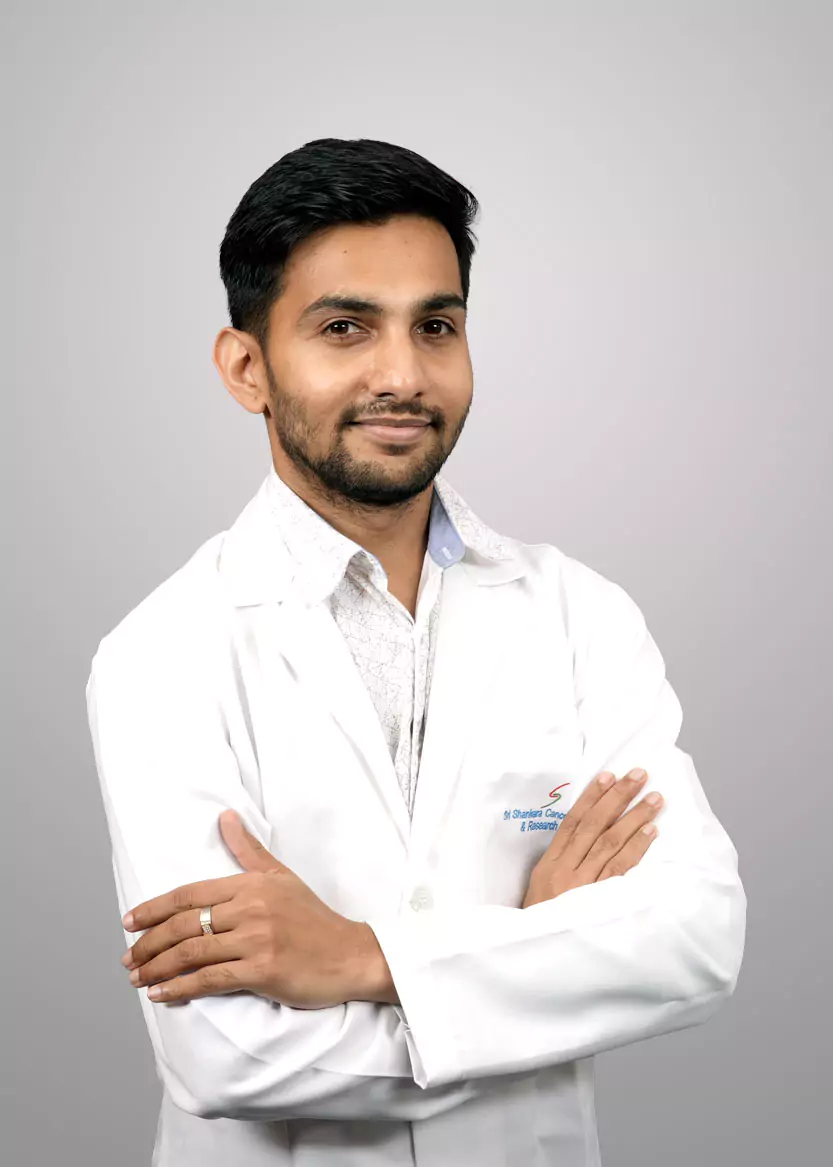
MBBS, MD - Radiodiagnosis (2023)
Jr. ConsultantRadiodiagnosis

MBBS, DMRD - Radiodiagnosis (Aug 1979), MD - Radiotherapy (1984)
ConsultantRadiodiagnosis

MBBS, DNB - Radiodiagnosis (Mar 2022), Fellowship in Breast Imaging & Onco Imaging (Jun 2023)
ConsultantRadiodiagnosis

MBBS, MD Radiodiagnosis (2022), DNB - Radiodiology (2023), FNB Breast Imaging & Interventions (2025)
Junior ConsultantRadiodiagnosis