
Our Microbiology & Virology Department is NABL accredited, ensuring the highest standards of quality and precision in diagnostic services.
The Microbiology and Virology Department serves as the first line of defense against infection, a critical function for patients with weakened immune systems due to cancer treatment. Our experts provide rapid, accurate diagnosis of infectious diseases using advanced molecular technologies like PCR. This precision is vital for guiding Antimicrobial Stewardship and delivering targeted therapy for infections (bacterial, fungal, and viral) with the speed necessary to protect highly vulnerable patients.
In oncology, infections remain a significant cause of illness and risk. The Microbiology and Virology lab is fundamental to patient safety, working closely with the clinical team and infection control practitioners to rapidly identify pathogens and monitor emerging resistance.
Our department is dedicated to providing rapid, accurate infectious disease diagnostics essential for protecting immunocompromised cancer patients, ensuring optimal infection control and antimicrobial stewardship.
We prioritize the immediate detection of infectious agents in high-risk groups, such as patients with hematologic malignancies, neutropenia, or those undergoing Bone Marrow Transplantation (BMT).
We provide timely Antimicrobial Susceptibility Testing (AST) and monitor local resistance patterns. This information guides clinicians away from empirical, broad-spectrum antibiotics toward targeted therapy, slowing the proliferation of multidrug-resistant organisms (MDROs).
We are integrated into hospital-wide infection control strategies, providing the epidemiological data needed to detect outbreaks, monitor Healthcare-Associated Infections (HAIs), and develop effective prevention policies.
Our laboratory utilizes state-of-the-art technologies that drastically reduce the turnaround time for pathogen identification, which is critical for patient survival during acute infection (e.g., sepsis).
Utilizes advanced molecular assays (PCR) for the rapid, highly sensitive, and specific detection of microbial nucleic acids (DNA/RNA). It is essential for detecting viruses (Influenza) and fastidious (hard-to-grow) bacteria.
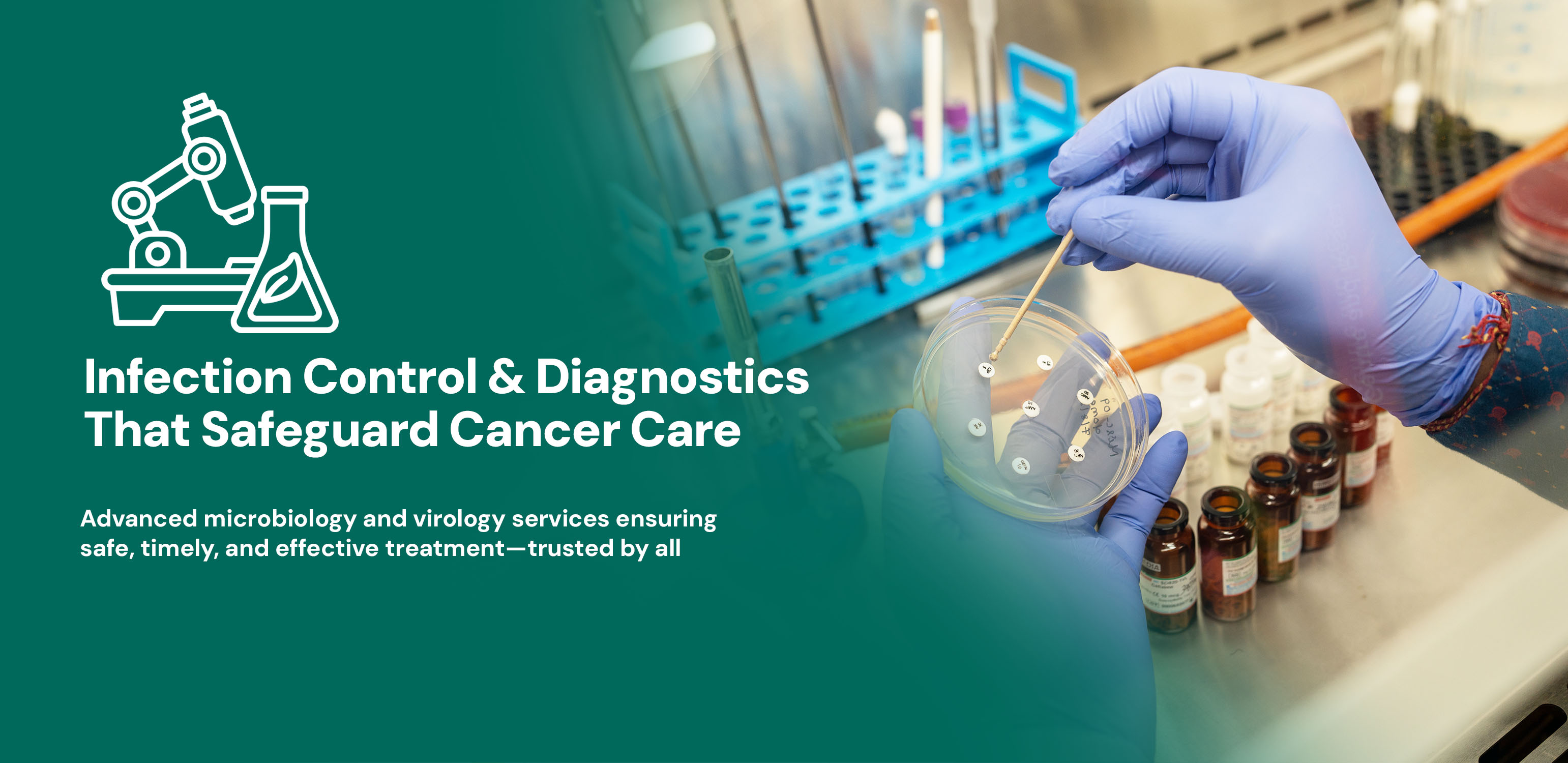
Laboratory testing that determines the in-vitro efficacy of various antimicrobial agents against an isolated pathogen. Results are crucial for selecting the most effective and least toxic antibiotic regimen.
Finding the Best Antibiotic: After identifying the germ, we test it against different antibiotics to see which one works best. This ensures the doctor prescribes a highly targeted drug that will efficiently kill your specific infection.
Specialized molecular and serological tests to diagnose infections that are known risk factors for cancer development: Human Papillomavirus (HPV) (Cervical Cancer), Epstein-Barr Virus (EBV) (Lymphoma, Nasopharyngeal Carcinoma), Also to monitor cytomegalovirus, Adenovirus EBV in BMT transplant patients.
Identifying Cancer Links: We test for specific infections that are strongly linked to causing certain cancers (like HPV or the H. pylori bacterium). This helps guide both prevention efforts and diagnosis.
Our implementation of syndromic multiplex PCR significantly mitigates the traditional long wait times for pathogen identification, directly leading to the prompt commencement of targeted therapy and reduced length of hospital stays for critical patients.
We maintain a dedicated team of experienced microbiologists and pathologists focused on infectious disease diagnostics. This specialized focus ensures superior performance and accuracy in identifying complex and emerging pathogens, which is vital for quality patient outcomes.
We actively participate in surveillance programs, providing continuous data on resistance patterns and HAIs to the hospital's Infection Control Practitioner (ICP). This rapid communication is the foundation of effective infection management and outbreak prevention.
Our accurate susceptibility data is the bedrock of the hospital's Antimicrobial Stewardship Program, ensuring responsible use of antibiotics to preserve their effectiveness for future high-risk patients.

MBBS, MD - Microbiology (Oct 2008)
Senior ConsultantMicrobiology and Virology