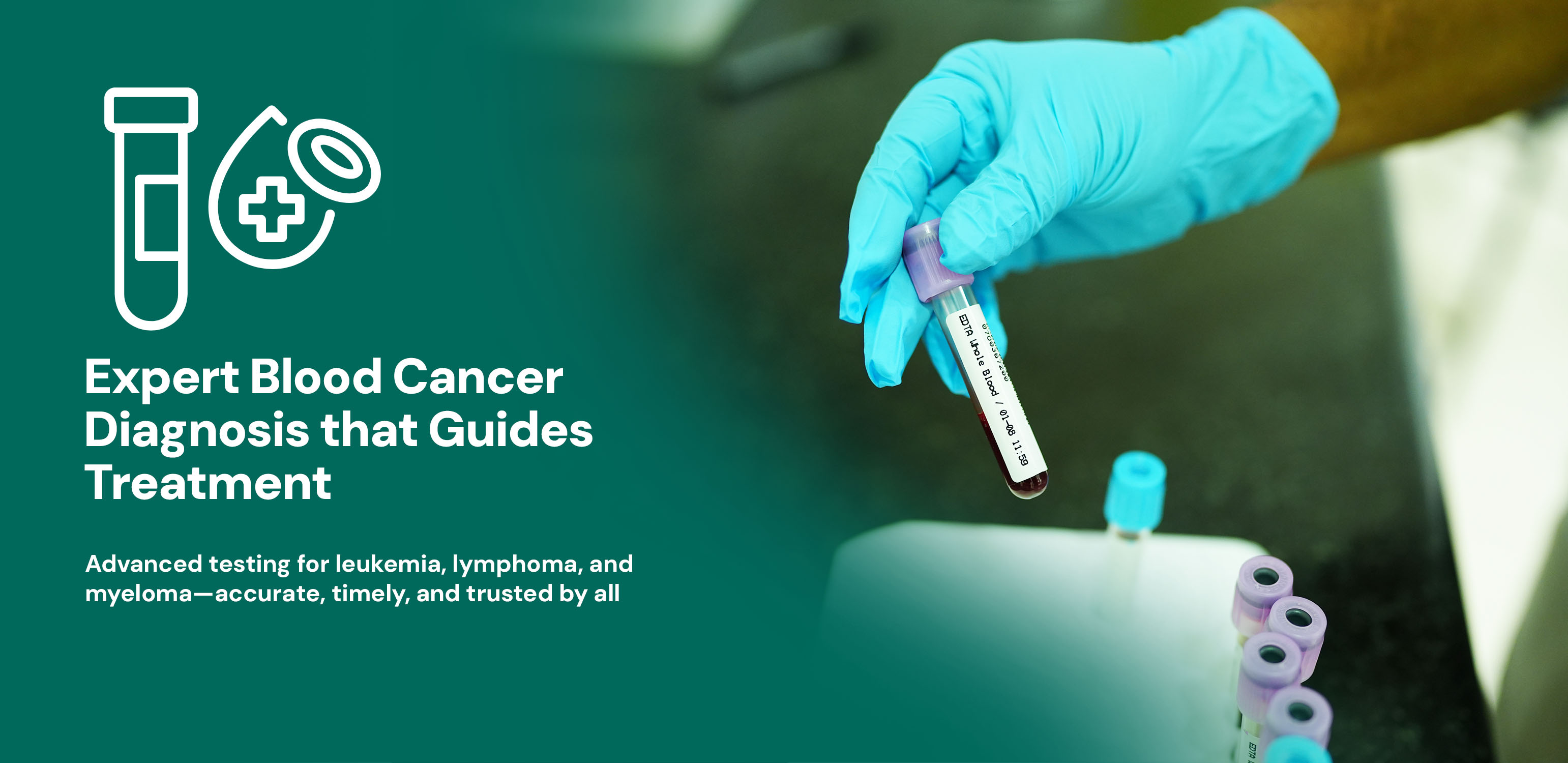

Our Haematopathology Department is NABL accredited, ensuring the highest standards of quality and precision in diagnostic services.
The Department of Hemato-Pathology forms the diagnostic foundation for diseases of the blood, bone marrow, and lymphoid system, including leukemias, lymphomas, and plasma cell disorders such as multiple myeloma. Accurate diagnosis at this level is essential, as treatment decisions in modern hematologic oncology are increasingly guided by the biological and genetic features of the disease.
Our hematopathologists combine microscopic evaluation with advanced technologies such as flow cytometry, cytogenetics (FISH), and molecular diagnostics, enabling precise classification of hematologic malignancies in accordance with the latest WHO guidelines. Beyond establishing a diagnosis, these investigations provide critical prognostic and predictive information that directly influences therapy selection, risk stratification, and decisions regarding stem cell (bone marrow) transplantation and targeted therapies.
While the hemato-oncologist manages patient care, the hematopathologist plays a pivotal role behind the scenes—interpreting complex laboratory data to define the exact nature and behavior of the disease.
We examine peripheral blood, bone marrow aspirates, and trephine biopsies to diagnose leukemias, detect bone marrow involvement by lymphomas, and identify metastatic or secondary marrow infiltrations, ensuring precise disease classification.
By assessing cellular lineage, immunophenotype, and genetic alterations, we identify disease-specific risk factors that help clinicians tailor therapy and predict treatment response.
Our hematopathologists work in close collaboration with hemato-oncologists, transplant physicians, and clinical teams to interpret findings in a clinical context, ensuring that laboratory insights translate into optimal patient management.
Our department integrates traditional morphology with highly sensitive cellular and molecular techniques to support diagnosis, treatment planning, and disease monitoring.
This rapid and highly sensitive technique analyzes thousands of cells individually, identifying abnormal cell populations based on their surface and intracellular markers. It is a cornerstone in the diagnosis and classification of leukemias and lymphomas and plays a vital role in therapy monitoring.
Patient Perspective:
This test helps identify the exact type of abnormal blood cells and may also reveal targets for immunotherapy.
Advanced genetic techniques (FISH, PCR, NGS) detect chromosomal rearrangements, gene mutations, and molecular signatures that define disease subtypes and prognosis. These findings often determine eligibility for targeted therapies.
Patient Perspective:
By studying the DNA of cancer cells, we uncover genetic changes that guide personalized treatment decisions.
Using multiparameter flow cytometry and sensitive molecular assays, MRD testing detects very low levels of residual disease after treatment—often invisible under the microscope. MRD status is a powerful predictor of relapse and long-term outcome.
Patient Perspective:
Even when tests appear normal, these methods look for tiny numbers of remaining cancer cells to help doctors decide whether further treatment is needed.
These procedures remain the gold standard for diagnosing and evaluating hematologic malignancies. They allow assessment of marrow cellularity, blast percentage, and tissue architecture, forming the basis for all advanced ancillary studies.
Patient Perspective:
This test provides the essential sample needed to confirm the diagnosis and perform detailed genetic and molecular analyses.
We have established high-sensitivity MRD protocols for leukemias and plasma cell disorders, enabling risk-adapted treatment strategies that are central to contemporary hematology practice.
Our team synthesizes findings from morphology, immunophenotyping, cytogenetics, and molecular studies, ensuring accurate diagnosis even in complex or rare hematologic neoplasms.
We provide essential diagnostic and monitoring support for bone marrow transplantation and CAR T-cell therapy, including pre-transplant risk assessment and post-therapy disease surveillance.
Detection of disease-specific antigens and genetic alterations helps determine eligibility for targeted drugs and immunotherapies, ensuring precision-based treatment selection.
Acute leukemias and other high-risk conditions require immediate clinical decisions. Our streamlined workflows ensure prompt reporting of critical results.
Active engagement in clinical research and continuous updates of diagnostic protocols ensure that our testing strategies reflect current WHO classifications and emerging biomarkers.

MBBS, MD - Pathology (Apr 2005), MBA- HCS (2012)
Senior Consultant & Lab DirectorHematopathology

MBBS, MD (Pathology), PDCC in Advanced Haematology
ConsultantHaematopathology