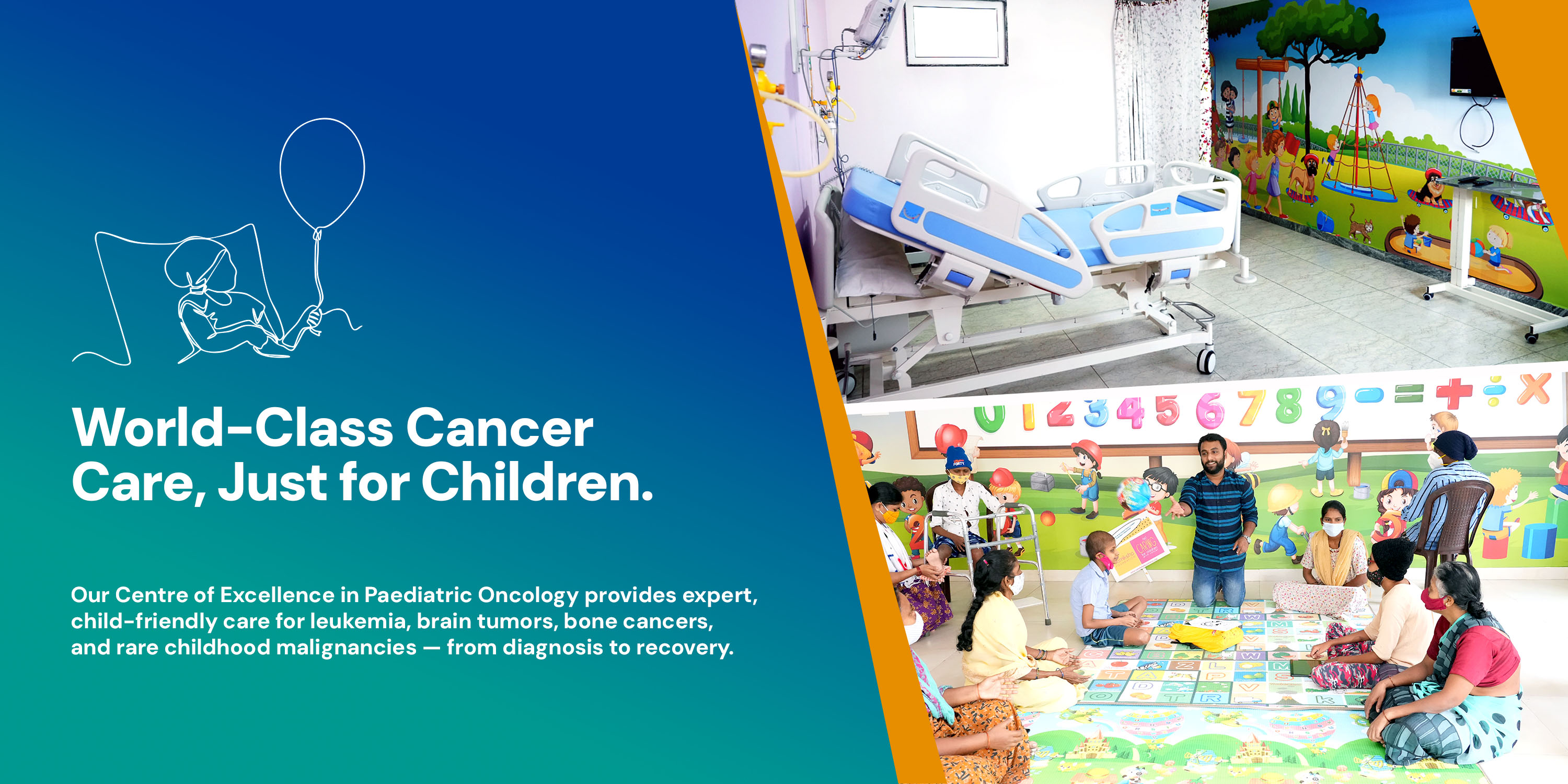
Cancer in children is profoundly different from adult cancer. Pediatric malignancies develop rapidly and often originate in actively growing and dividing cells. The excellent news is that treatment for childhood cancers has seen dramatic improvements in outcomes over the past five decades. Today, with access to specialized care, the majority of children diagnosed with cancer survive at least five years, and many are cured completely. This remarkable progress is a direct result of advances in treatment protocols, precision diagnostics, and world-class supportive care—achievements earned through decades of dedicated, collaborative international research.
Globally, an estimated 400,000 children and adolescents develop cancer each year. In healthcare systems with comprehensive, specialized services, cure rates for childhood cancer exceed 80%. These variable outcomes underscore the critical importance of timely diagnosis, specialized treatment, and access to a multidisciplinary care team.
The three most common types of childhood cancer account for the majority of diagnoses:
As the most common childhood cancer (approximately 25–30% of pediatric cancers), Leukemia originates in the bone marrow. Acute Lymphoblastic Leukemia (ALL) accounts for about 75% of childhood leukemias and has achieved remarkable cure rates, with five-year survival rates exceeding 90% in recent years. Acute Myeloid Leukemia (AML), the second most common, is also increasingly treatable with contemporary multimodal approaches.
Representing the most common solid malignancy in children, these tumors vary widely. With modern surgical techniques, chemotherapy, and radiation, five-year survival rates for pediatric brain tumors now range from 70% to over 84%.
Hodgkin Lymphoma and Non-Hodgkin Lymphoma (NHL) together represent 10–15% of pediatric cancers. Hodgkin Lymphoma is highly curable, with five-year survival rates exceeding 90%. Non-Hodgkin Lymphoma survival has improved dramatically, with cure rates now exceeding 90% thanks to advanced chemotherapy regimens and risk-adapted strategies.
Other important pediatric cancers include neuroblastoma, Wilms tumor (kidney cancer), osteosarcoma (bone cancer), Ewing's sarcoma, and rhabdomyosarcoma (soft tissue sarcoma). Each requires specialized treatment protocols developed through international collaborative research networks like the Children's Oncology Group (COG), with steadily improving outcomes.
Modern pediatric oncology employs multimodal therapy—combining traditional methods with innovative new treatments—to maximize cure rates while minimizing long-term side effects. The specific treatment plan is carefully tailored to each child's cancer type, stage, age, and unique biological characteristics.
Surgical resection remains a cornerstone, removing the primary tumor and helping to determine the extent of disease. Our modern pediatric surgical techniques prioritize complete tumor removal while preserving function and minimizing complications.
Chemotherapy is often highly effective against pediatric cancers because most childhood malignancies grow rapidly, and chemotherapy targets fast-growing cells. Children generally recover well from intensive regimens, leading to high cure rates.
Targeted radiation therapy uses high-energy beams to kill cancer cells at specific tumor sites. We use modern techniques such as Intensity-Modulated Radiation Therapy (IMRT), Proton Therapy, and Stereotactic Radiosurgery to allow for precise tumor targeting while reducing exposure to surrounding healthy tissues.
For certain high-risk or recurrent cancers (including specific leukemias, lymphomas, and neuroblastoma), HSCT offers intensified therapy. This allows for the delivery of ultra-high-dose chemotherapy followed by a 'rescue' with healthy stem cells.
This revolutionary approach involves genetically engineering a child's own T cells (immune cells) to recognize and attack cancer cells. CAR-T cell therapy has transformed treatment for relapsed or refractory leukemias and other blood cancers, achieving high rates of complete and durable remission.
These therapies exploit specific genetic mutations found in cancer cells, attacking the cancer at the molecular level. Agents such as tyrosine kinase inhibitors and pathway inhibitors offer improved efficacy with reduced toxicity compared to traditional chemotherapy.
Global pediatric oncology data is highly encouraging, showing exceptional five-year survival rates, which often exceed 85% across all age groups from 1 to 19 years old.
94–96%
Survival rates are exceptionally high, often 94–96% in younger children.
>90%
Excellent prognosis with greater than 90% five-year survival.
>90%
Five-year survival is now over 90%.
74–84%
Five-year survival is typically 74–84%, depending on the specific tumor type and extent.
These statistics underscore that with appropriate treatment by experienced pediatric oncologists, the majority of children with cancer today are cured and become long-term survivors.
A critical factor in the success of pediatric cancer treatment is the exceptionally high enrollment in cooperative group clinical trials. More than 50% of children diagnosed with cancer are treated on research protocols. This extensive trial participation, coordinated by international groups like the Children's Oncology Group (COG), enables systematic learning, uniform therapy administration, and the consistent advancement of treatment over decades. Families interested in clinical trial enrollment are encouraged to discuss options with their oncology team.
While cure rates are excellent, the management of treatment side effects requires careful attention.
Important: Two of every three childhood cancer survivors will develop at least one late-effect complication, emphasizing the need for comprehensive long-term follow-up care. Your oncology team will provide an individualized Survivorship Care Plan to monitor for and manage these potential issues.
Optimal pediatric cancer care requires seamless collaboration among a vast network of specialists and professionals operating under a family-centered care model.
Pediatric Oncologists, Pediatric Surgeons, Radiation Oncologists, and Pediatric Pathologists.
Pediatric Hematologists, Infectious Disease Specialists, Nutritionists, Palliative Care Specialists, Specialized Nursing Staff, and Pharmacists.
Pediatric Psychologists/Psychiatrists, Social Workers, Child Life Specialists, Mental Health Counselors, and Spiritual Support staff.
School Liaison Specialists and Neuropsychologists.
We recognize that the cancer experience affects the entire family—parents, siblings, and extended networks. We employ sophisticated psychosocial support systems to identify specific family needs and provide appropriate interventions, from universal education to specialized mental health services.
We use advanced genetic sequencing and molecular testing to characterize each child's cancer at the deepest molecular level. This information is critical for:
Our Child Life Specialists provide age-appropriate emotional support, distraction techniques, and procedural preparation to reduce anxiety and improve cooperation during treatment. We also focus on School Reintegration and Academic Support, coordinating with schools to facilitate a return to normalcy and arranging neuropsychological testing to identify any learning needs.
We offer support groups, counseling, and education specifically designed for siblings to acknowledge their unique challenges and foster healthy family functioning.
Upon treatment completion, every family receives an individualized Survivorship Care Plan. This detailed document outlines the cancer diagnosis, treatment history, potential late effects, and recommended long-term screening schedules, ensuring coordinated care between all specialists as the child transitions into long-term survivorship.
Our Centre of Excellence is committed to providing evidence-based, compassionate, family-centered care that achieves the highest chance of cure and a healthy future.
Our experienced pediatric oncologists, surgeons, and specialists are dedicated exclusively to children's cancer care, employing protocols aligned with leading international guidelines (NCCN, ESMO, ASCO, COG).
We ensure coordinated care among all medical, supportive, and psychosocial specialists.
We offer rapid tumor characterization, including molecular testing, to guide precision medicine.
We provide access to the latest therapies, including CAR-T cell programs and clinical trials.
Our comprehensive psychosocial support, financial counseling, and sibling support ensure holistic family well-being.
With modern, multimodal therapy coordinated by experienced teams, the majority of children with cancer survive and thrive, leading fulfilling adult lives.