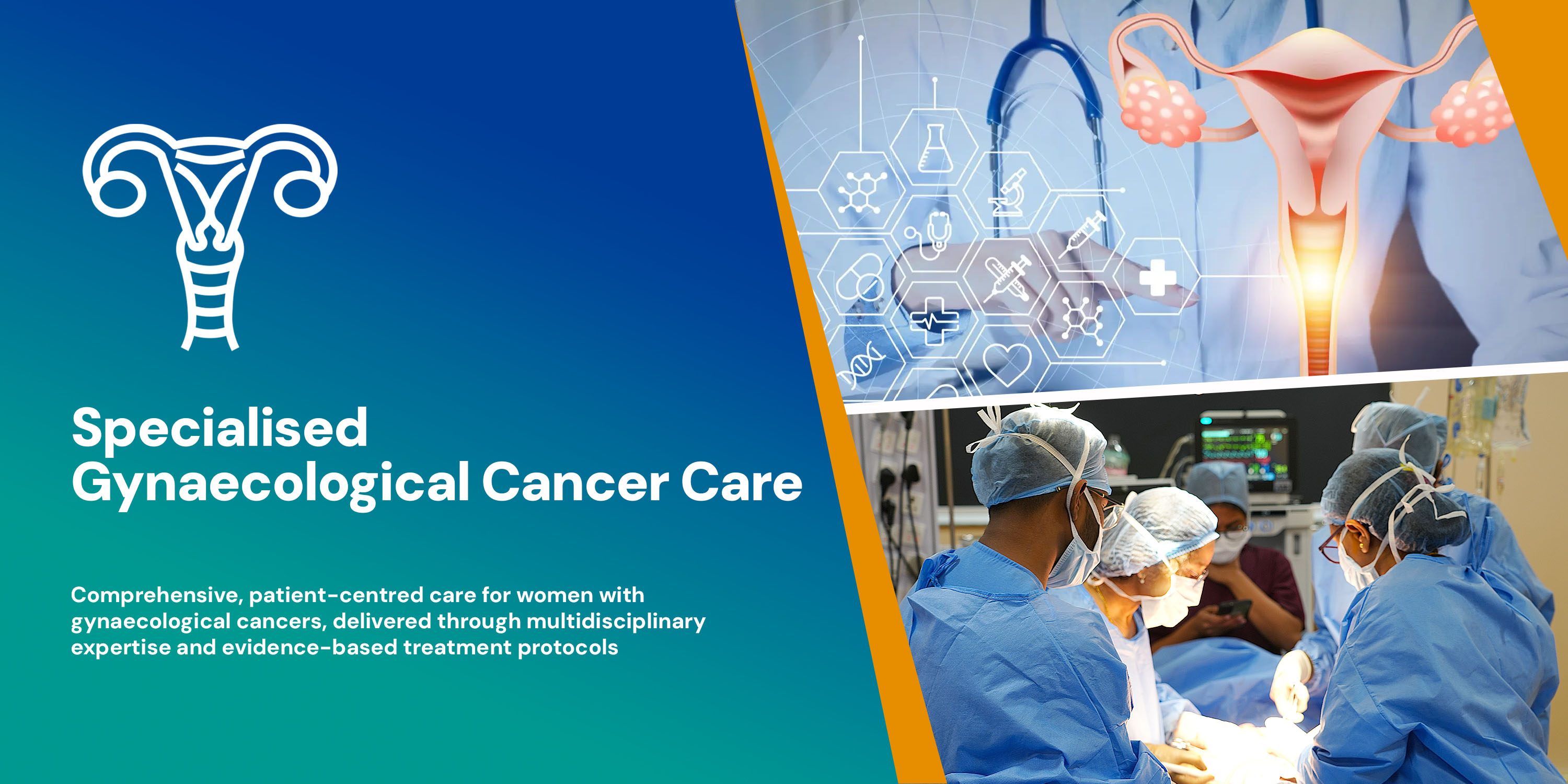
Multidisciplinary Team
The Centre of Excellence in Gynaecologic Oncology brings together a multidisciplinary team of:
- Gynecologic oncologists
- Radiation oncologists
- Medical oncologists
- Pathologists & Radiologists
- Genetic counselors
- Fertility specialists
- Supportive care specialists
This collaborative team manages all aspects of women's reproductive cancers under one roof.
Cancer Prevention & Screening
Early Diagnosis
Ferility sparing surgeries
Complex and radical pelvoabdominal surgeries and palliative surgeries
Molecular tumor boards and molecular classification of tumors, multidisciplinary tumor board discussions for complex cases
Chemotherapy, targeted therapy, and immunotherapy
Image Guided Radiation therapy
NIPEC and PIPAC for advanced ovarian /fallopian tubal/peritoneal malignancies
Clinical Trials & Survivorship Programs
Quality of Life Focus
We maintain a strong focus on quality of life and functional outcomes. The team treats all cancers and precancerous conditions of the female reproductive tract. Premalignant conditions like high-grade cervical dysplasia and vulval precancerous conditions are offered treatment and followed up to eliminate cancer.
Women with known genetic mutations are offered risk reduction surgeries at our centre. A team of gynecologic oncologist, genetic counsellor, and psychooncologist together plan the treatment flow for the woman, including her family into the discussions. Our care pathways strictly follow evidence-based algorithms from leading national and international oncology organizations regarding cancer risk reduction surgeries.
Cervical Cancer
From precancerous CIN to locally advanced, recurrent and metastatic disease
Ovarian, Fallopian Tube & Peritoneal Cancers
Epithelial, germ cell, sex-cord stromal tumours, and rare tumors of mullerian origin
Uterine Cancers
Endometrial carcinoma including carcinosarcoma, undifferentiated carcinoma, dedifferentiated carcinoma and uterine sarcomas like leiomyosarcoma, endometrial stromal sarcoma, adenosarcoma, rare tumors of endometrium
Vulvar & Vaginal Cancers
Including HPV-associated and independent squamous cell carcinoma and rare subtypes
Benign & Borderline Tumours
Ovarian/fallopian tube tumours and high-risk benign pelvic masses requiring oncologic-level surgery
Hereditary Cancer Syndromes
BRCA, Lynch syndrome and others affecting the gynecologic tract, with risk-reducing strategies and surveillance
1. Gynaecologic Oncology Surgery
What it is: Specialized cancer surgery focused on organs of the female reproductive system, performed by gynecologic oncologists trained in both complex pelvic surgery and cancer care.
How it works: Depending on the diagnosis and stage, surgery may involve removal of the uterus (simple/radical hysterectomy), ovaries and fallopian tubes (bilateral salpingo-oophorectomy), part of the cervix (conization/trachelectomy), sentinel lymph node mapping, pelvic and paraaortic lymph node mapping and dissection, debulking of tumour deposits in the abdomen, which may include omentectomy, parametrectomy, liver resection, diaphragm stripping, peritonectomy, splenectomy, bowel resection.
For vulval cancers, simple or radical vulvectomy is offered. Groin node dissection is done for cancers of vulva/recurrent/metastatic disease as per requirement of the patient. In rare cases or recurrent tumors, anterior/posterior/total pelvic exenteration may be offered. The recurrent cases are offered repeat surgeries in ovarian cancers. In cervical cancers with recurrence, we offer pelvic exenterative surgeries when applicable. Palliative surgeries, as diversion colostomy, hysterectomy are also performed. The procedures are tailored as per diagnosis of the case.
Minimally invasive techniques, such as laparoscopy and robotic surgery, are used whenever appropriate to reduce blood loss, surgical site infection and recovery time—while following all the principles for oncologic surgeries. Minimally invasive surgery leads to less pain, shorter hospital stays, and faster recovery.
Benefits & advantages of surgery done by a gynecologic oncologist: Allows for precise staging to guide further therapy. Primary surgery with maximal tumour reduction in ovarian cancer surgery is strongly linked with improved survival in ovarian cancer. The women live longer when operated by gynecologic oncologist than other surgeons.
2. Chemotherapy (Systemic and Intraperitoneal)
What it is: Chemotherapy uses anti-cancer medicines to kill rapidly dividing cancer cells or stop their growth. It can be given intravenously, orally, or directly into the abdominal cavity (intraperitoneal chemotherapy) for selected ovarian cancers.
How it works: Intravenous chemotherapy drugs circulate through the bloodstream to treat cancer cells throughout the body. Chemotherapy is given for enhancing the effect of radiation therapy in cervical and vaginal cancers. In ovarian cancers, chemotherapy is essential. Intraperitoneal chemotherapy delivers high local concentrations of chemotherapeutic drugs to the peritoneal surfaces inside the abdomen.
These treatments are offered to advanced ovarian/fallopian tubal cancers and peritoneal cancers. NIPEC is routinely offered to patients of advanced ovarian cancer. PIPAC is offered as a palliative procedure to decrease fluid and masses in abdomen in advanced ovarian cancer cases. Regimens and schedules are chosen based on evidence-based guidelines for each cancer type.
Benefits & advantages:
- Treats microscopic disease not visible on scans, which reduces the chance of cancer recurrence risk
- It may shrink tumours before surgery (neoadjuvant chemotherapy), potentially making them ready for operations that are less extensive, with lesser complications during surgery and better post-operative outcome
- Chemotherapy when added to radiotherapy in post-operative settings help prolong life of women with cancer
- Intraperitoneal chemotherapy with NIPEC, normothermic intraperitoneal chemotherapy, in our ongoing study, has so far, shown good disease control and has prolonged life of women with advanced ovarian cancer
- PIPAC improves quality of life in ovarian cancer women
3. Targeted Therapy and PARP Inhibitors
What it is: Medicines that act on specific molecular pathways driving cancer growth. This includes PARP inhibitors for BRCA-mutated or homologous recombination–deficient ovarian cancer, and agents targeting specific receptors.
How it works: PARP inhibitors block DNA repair in cancer cells already deficient in other repair pathways, leading to cell death. Other therapies focus on inhibiting blood vessel growth (angiogenesis) or signalling molecules on cancer cells, often combined with chemotherapy.
Benefits & advantages: Can prolong progression-free survival and delay relapse in ovarian cancer when used as maintenance therapy. Often better tolerated than traditional chemotherapy alone, with a more targeted effect.
4. Immunotherapy (Immune Checkpoint Inhibitors)
What it is: Immunotherapy, specifically immune checkpoint inhibitors, helps the body's immune system recognize and attack cancer cells by blocking inhibitory pathways.
How it works: Checkpoint inhibitors release "brakes" on immune cells, making them more active against tumour cells. They are particularly relevant in PD-L1–positive cervical cancer and certain endometrial cancers with mismatch repair deficiency (dMMR) or high microsatellite instability (MSI-H).
Benefits & advantages: Offers durable responses in a subset of patients with advanced or previously treated recurrent disease. Can be combined with radiation to enhance both local and systemic immune response.
5. Molecular Characterization
Molecular characterization of all gynecologic tumors are carried out by IHC/Sanger sequencing/NGS—for confirming diagnosis, prognostication and treatment planning. Cases are discussed in molecular tumor boards.
6. Radiation Therapy (IMRT, Brachytherapy)
What it is: Radiation therapy uses high-energy beams to destroy cancer cells or stop them from multiplying. External beam radiation is often combined with internal radiation (brachytherapy).
How it works: External beam radiation therapy (EBRT), including intensity-modulated radiation therapy (IMRT), shapes the dose around the tumour to limit exposure to nearby organs. Brachytherapy places a radiation source inside or close to the tumour to deliver a high dose directly to cancer cells while sparing normal tissue.
Benefits & advantages: Organ-preserving treatment for many stages of cervical, vaginal, and vulvar cancers. It can be used as primary treatment for unfit women with endometrial cancers or when pelvic tumor bleeding is excessively. Brachytherapy improves local control and survival in cervical cancer.
7. Fertility-Sparing and Reconstructive Options
What they are: Specialized surgical and medical strategies designed to treat cancer while preserving fertility and pelvic function whenever safely possible.
How they work: Includes fertility-sparing surgery in ovarian and cervical cancers (e.g., conization, radical trachelectomy, preserving one ovary or uterus) and hormonal management for selected early-stage endometrial cancers. Onco-fertility counselling and referral for oocyte, embryo, or ovarian tissue preservation are provided prior to chemotherapy or radiation therapy or at the time of surgery. Reconstructive procedures restore pelvic structure and function after extensive surgery or radiation therapy.
Benefits & advantages: Offers the possibility of future pregnancy for eligible patients without compromising oncologic safety. Improves body image, sexual health, and quality of life after radical surgery.
8. Research in Gynecologic Cancers
The team doctors actively are engaged in research activities on gynecologic cancers to understand the cause of recurrence in gynec cancers and ways to improve the quality of life of the women with gynec cancers.
Multidisciplinary, Guideline-Driven Care
- All cases are discussed in tumour boards involving a full spectrum of specialists: gynecologic oncologists, radiation oncologists, medical oncologists, pathologists, radiologists, geneticists, and fertility experts.
- Treatment plans strictly follow guidance from NCCN, NCI, ESMO, ASCO, and WHO—adapted to each patient's stage, comorbidities and personal priorities.
Advanced Surgical and Radiation Technologies
- We utilize minimally invasive and robotic gynaecologic oncology surgery for appropriate cases, enhancing recovery while maintaining oncologic quality.
- IMRT-based pelvic radiation and image-guided brachytherapy maximize tumour control and minimize normal tissue damage.
Integrated Systemic and Precision Medicine
- We offer the full spectrum of systemic therapies: chemotherapy, intraperitoneal Chemotherapy—NIPEC, hormonal therapy, targeted therapy (including PARP inhibitors), and immunotherapy.
- Molecular profiling and genetic testing are used to tailor treatment based on tumour biology and hereditary cancer risk (BRCA, Lynch, and other syndromes).
Fertility, Sexual Health, and Survivorship Focus
- Dedicated onco-fertility counselling and fertility-sparing treatment options are available for eligible young women.
- The GynecOnco team addresses the menopausal symptoms, sexual health, pelvic floor function, lymphedema, and psychosocial support during and after treatment.
Access to Clinical Trials and Innovative Therapies
- We participate in national and international clinical trials evaluating new chemotherapy combinations, targeted agents, immunotherapy, and novel chemo-radiation strategies.
- Patients have early access to promising therapies under rigorous ethical and safety oversight.
Comprehensive Supportive and Palliative Care
- Symptom control (pain, bleeding, ascites), nutritional support, psychological counselling, and social work support are integrated from diagnosis through survivorship or end-of-life care as appropriate.
- We prioritize clear communication, shared decision-making, and support for caregivers throughout the treatment journey.