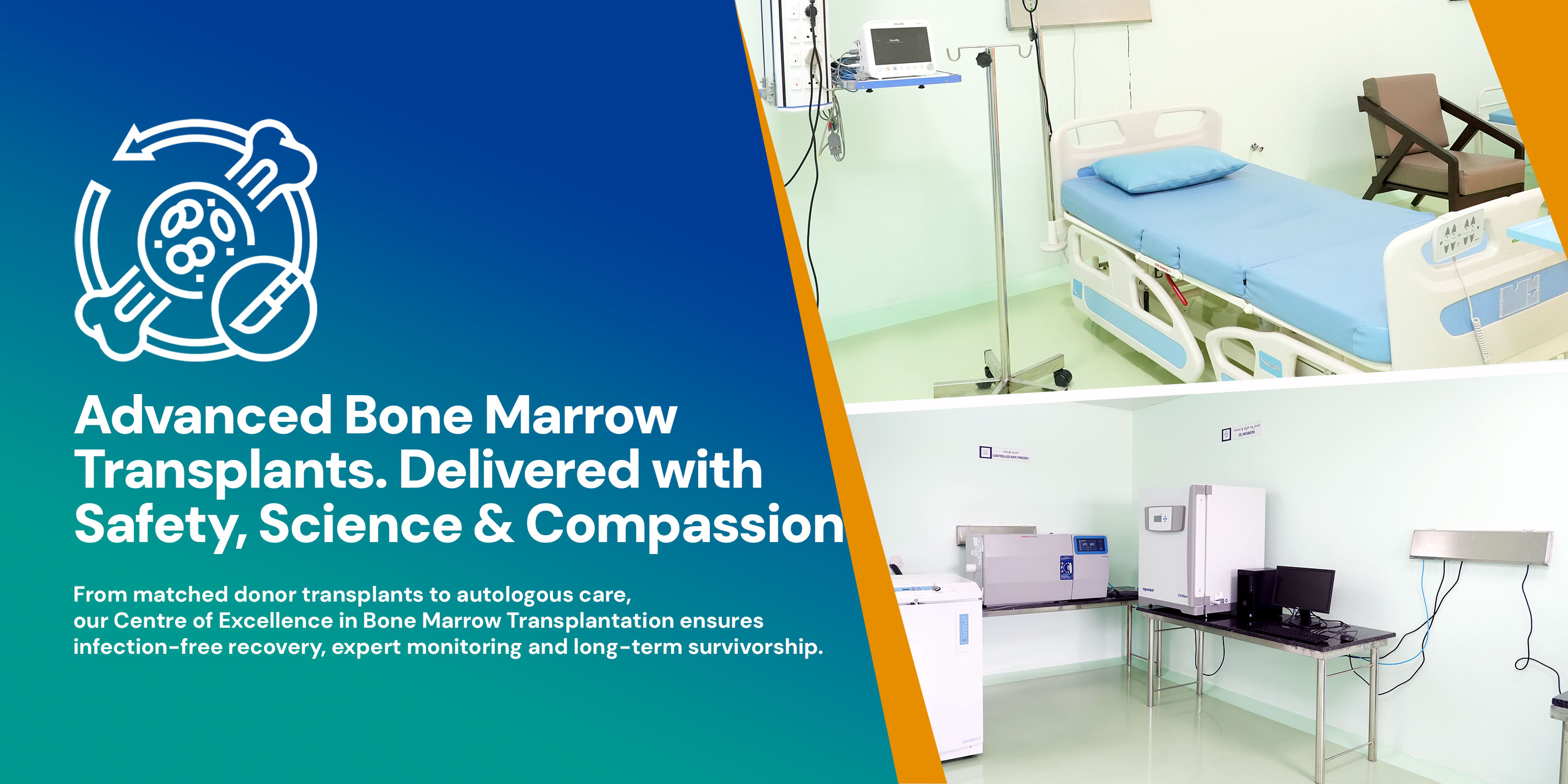
Bone marrow is the soft, spongy tissue inside most bones responsible for producing blood stem cells. These unspecialized cells develop into the essential components of your blood: red blood cells (for oxygen transport), white blood cells (for fighting infection), and platelets (for blood clotting). When severe diseases like cancer damage the bone marrow, or when intensive treatments like chemotherapy and radiation are used, the body's ability to produce these vital cells is destroyed. A bone marrow transplant (BMT), also known as a hematopoietic stem cell transplant, is a procedure that replaces the damaged or destroyed bone marrow with healthy stem cells, thereby restoring the body's capacity to produce a healthy blood supply.
Bone marrow transplantation is an established, potentially life-saving treatment for patients diagnosed with blood cancers and certain other serious blood conditions that have been resistant to conventional therapies. It represents one of the most significant advances in cancer medicine, offering many patients the possibility of a cure or prolonged survival.
The transplant process involves several carefully managed phases:
The patient first receives intensive conditioning therapy, which involves high-dose chemotherapy and, in some cases, radiation. The goals of this therapy are to eliminate any remaining cancer cells, suppress the patient's immune system to prevent rejection of the new stem cells, and create the necessary space in the bone marrow for the new, healthy cells to grow.
Once the conditioning phase is complete, healthy stem cells are infused directly into the patient's bloodstream through an intravenous (IV) line, a process that is similar to a routine blood transfusion. The infusion procedure itself is typically painless and is performed while the patient remains awake.
Over the next several weeks, these infused stem cells naturally travel to the bone marrow and begin the critical process of engraftment—growing and differentiating into new red blood cells, white blood cells, and platelets. This restores the body's blood-producing capacity and gradually rebuilds immune function. Throughout this recovery period, the medical team provides close monitoring and manages potential side effects such as nausea, fatigue, and infection risk to ensure the best possible outcome.
The most appropriate type of transplant is determined by the medical team based on the patient's condition, disease status, and donor availability.
This method utilizes the patient's own stem cells, which are harvested while their disease is in remission or stable, then frozen and stored when required (CRYOPRESERVATION). They are reinfused after the conditioning therapy. This is commonly used for conditions like multiple myeloma, lymphomas, and neuroblastoma etc.
This procedure uses stem cells from a matched donor, who may be a sibling, an unrelated matched volunteer found through national or international donor registries. The donor's healthy immune cells provide a powerful anti-cancer effect known as graft-versus-tumor activity. However, a potential complication is graft-versus-host disease (GVHD), where the donor's cells attack the patient's healthy tissues, which requires careful management. Allogeneic transplants are typically recommended for leukemias, myelodysplastic syndromes, and high-risk lymphomas.
In the rare instance that a patient has an identical twin, stem cells from the twin can be used. This is the least complicated type, as there is no risk of rejection or GVHD.
For patients without a perfectly matched donor or those with health limitations, modern techniques have expanded the availability of transplantation:
This approach utilizes a partially matched donor, such as a parent or child. Advanced preventative methods are employed to manage the risk of graft-versus-host disease, making transplantation possible for a wider range of patients.
This uses lower doses of chemotherapy and radiation, making it a suitable option for older patients or those too frail to tolerate traditional high-dose conditioning. This approach relies significantly on the beneficial graft-versus-tumor effect for disease control.
Following an allogeneic transplant, additional donor white blood cells may be infused to strengthen the anti-cancer immune response and help maintain remission.
BMT is a treatment option for a wide array of hematological malignancies and selected non-malignant conditions.
Transplant feasibility is influenced by factors such as age, overall health, disease stage, and the availability of a suitable donor. A patient's medical team conducts a careful evaluation to determine the most appropriate course of action.
For many patients, bone marrow transplantation offers significant survival advantages that cannot be achieved with conventional chemotherapy alone. Key clinical benefits include:
Potential for cure or long-term remission in blood cancers, particularly when performed during early disease stages.
Graft-versus-tumor effect in allogeneic transplants, where donor immune cells actively recognize and destroy residual cancer cells.
Disease control for chemotherapy-resistant cancers, extending survival for patients who have stopped responding to standard treatments.
Improved survival rates that have steadily increased over the past decade, with overall survival rates ranging from 50% to over 90% in select patient populations, depending on the disease type and risk factors.
Restored bone marrow function in non-malignant conditions, such as inherited blood disorders and aplastic anemia, for which long-term survival rates are often 70–90%.
Continuous modern advances in donor matching (HLA typing), infection prevention, and GVHD management have significantly improved transplant outcomes, making this treatment option available to an increasingly broad patient population, including older and more medically fragile individuals.
Bone marrow transplantation is an intensive medical procedure associated with serious potential complications that necessitate vigilant management. Understanding these risks is crucial for informed decision-making.
This primary risk in allogeneic transplants occurs when donor immune cells attack the patient's healthy tissues, recognizing them as foreign. GVHD can be acute (within the first 100 days) or chronic (developing later), affecting organs such as the skin, gastrointestinal tract, and liver. While a serious risk, GVHD is also linked to the beneficial graft-versus-tumor effect. Modern strategies, including careful donor-patient matching and immunosuppressive therapy, have substantially reduced its severity.
The specific risks are highly variable based on the disease type, disease stage, patient age, overall health, donor match quality, and transplant type. The medical team will comprehensively discuss all potential risks and outline the preventative strategies and close monitoring protocols used to minimize them.
Successful transplantation requires comprehensive preparation across multiple domains.
Extensive testing is conducted to ensure the patient is physically and emotionally ready:
A central line (e.g., a Hickman or PICC line) is placed in a large vein. This catheter remains in place throughout the hospital stay and recovery, facilitating the easy administration of chemotherapy, stem cell infusion, antibiotics, blood products, and nutrients, which minimizes the number of needle sticks.
Typically administered 7–14 days before the stem cell infusion, this intensive chemotherapy and/or radiation regimen works to:
Conditioning intensity varies, from myeloablative (complete bone marrow destruction) to reduced-intensity (non-myeloablative or "mini" transplants).
The transplant team provides thorough education on what to expect, coping strategies, and support system arrangements. A committed caregiver is essential during the hospital stay and recovery period to manage daily needs and ensure attendance at frequent medical appointments.
The actual stem cell infusion is straightforward and painless. Stem cells are prepared (thawed if frozen, or collected fresh) and infused directly into the bloodstream through the central catheter. The procedure typically takes several hours.
The infused stem cells travel to the bone marrow and begin to establish themselves. During this critical time, blood cell counts are extremely low, requiring:
Most patients are hospitalized for 2–3 weeks during this early phase.
As engraftment progresses and blood counts recover, the risk of infection decreases. Patients gradually return to normal activities while continuing regular outpatient visits for disease monitoring and complication management.
Full immune recovery takes months to years. Patients remain at an increased risk for infections during this time, especially if chronic GVHD develops. Energy levels improve, and normal life activities resume, though continued medical follow-up remains essential.
Modern bone marrow transplant programs incorporate cutting-edge techniques to continually improve patient outcomes:
High-resolution HLA typing now enables successful transplantation with partially mismatched donors, significantly expanding the donor pool for patients without perfectly matched family members.
Advanced regimens allow for transplantation in older adults and medically fragile patients who cannot tolerate traditional high-dose conditioning.
Sophisticated monitoring tools and preemptive antiviral therapy have substantially reduced serious infections, such as CMV disease, which now occur at a much lower rate in the early post-transplant phases.
Some advanced centers combine BMT with other modalities like CAR-T cell therapy to enhance the anti-cancer effect, leading to high complete response rates in certain cancer populations.
Comprehensive follow-up care is provided to address long-term complications, fertility preservation, psychological well-being, and overall quality of life for transplant survivors.
Bone marrow transplant outcomes have significantly improved over the last decade, driven by advances in donor matching, supportive care, and immunological management. Current data demonstrate:
79–94%
Reported rates range from 79–94% across major international transplant centers in recent years.
47–86%
Reported rates range from 47–86%, with steadily improving trends.
50–70%
Typically ranges from 50–70%, varying by lymphoma subtype.
50–80%
Reported rates range from 50–80%, with improvements due to newer conditioning regimens.
70–90%
Reported rates are often between 70–90%.
These positive outcomes are the result of careful patient selection, optimized conditioning regimens, effective prevention and treatment of GVHD, and enhanced supportive care strategies grounded in international oncology guidelines (NCCN, ESMO).
Our Bone Marrow Transplantation Centre is led by a dedicated, multidisciplinary team of experienced hematologists, transplant specialists, nurses, pharmacists, coordinators, and support staff. We are committed to optimizing outcomes and quality of life for every patient through:
Pre- and post-transplant evaluations use standardized protocols aligned with stringent international guidelines (NCCN, ESMO).
We utilize high-resolution HLA typing and have access to extensive regional and international donor registries.
We provide 24/7 monitoring and expert management of complications in a specialized setting.
We offer options for older and medically fragile patients who cannot tolerate traditional high-dose conditioning.
We employ sophisticated molecular diagnostics and preemptive antiviral therapy to minimize serious infections.
Comprehensive follow-up care is provided to address long-term complications and quality-of-life optimization.
We acknowledge and support the intense physical and emotional demands of the transplantation journey.
We are involved in partnerships that bring cutting-edge treatments and clinical trials to our patients.
Every transplant patient receives an individualized care plan tailored to their specific disease, risk profile, and personal circumstances, ensuring the best possible outcomes while maintaining dignity and hope throughout the entire process.